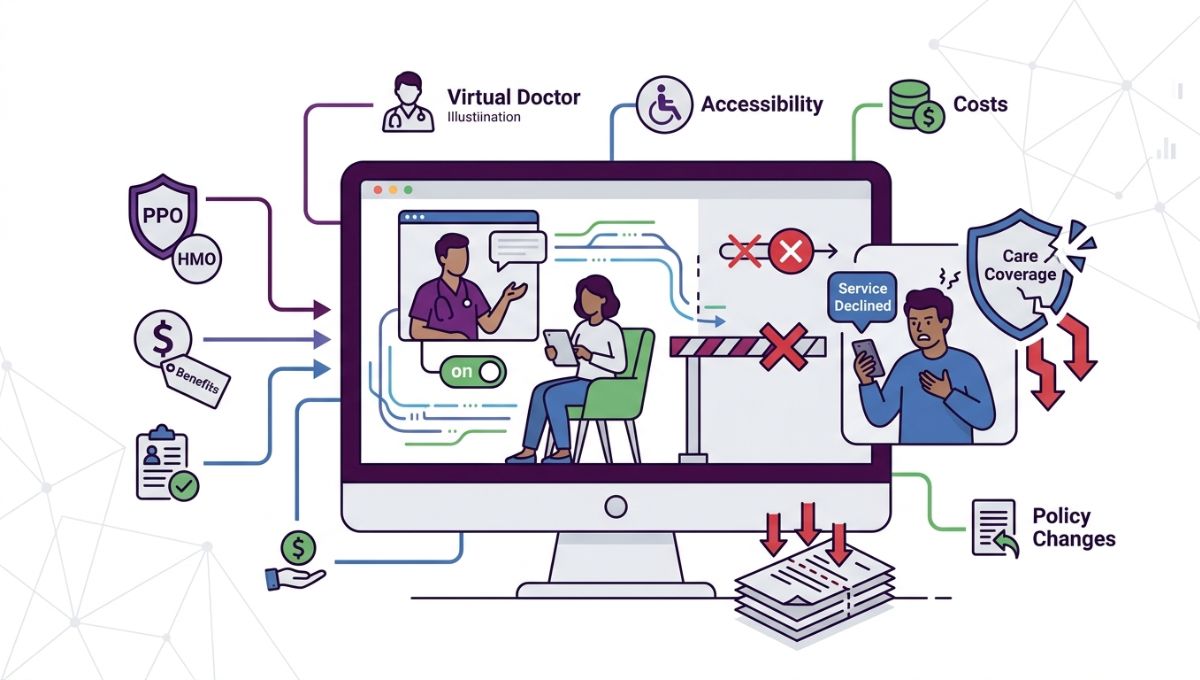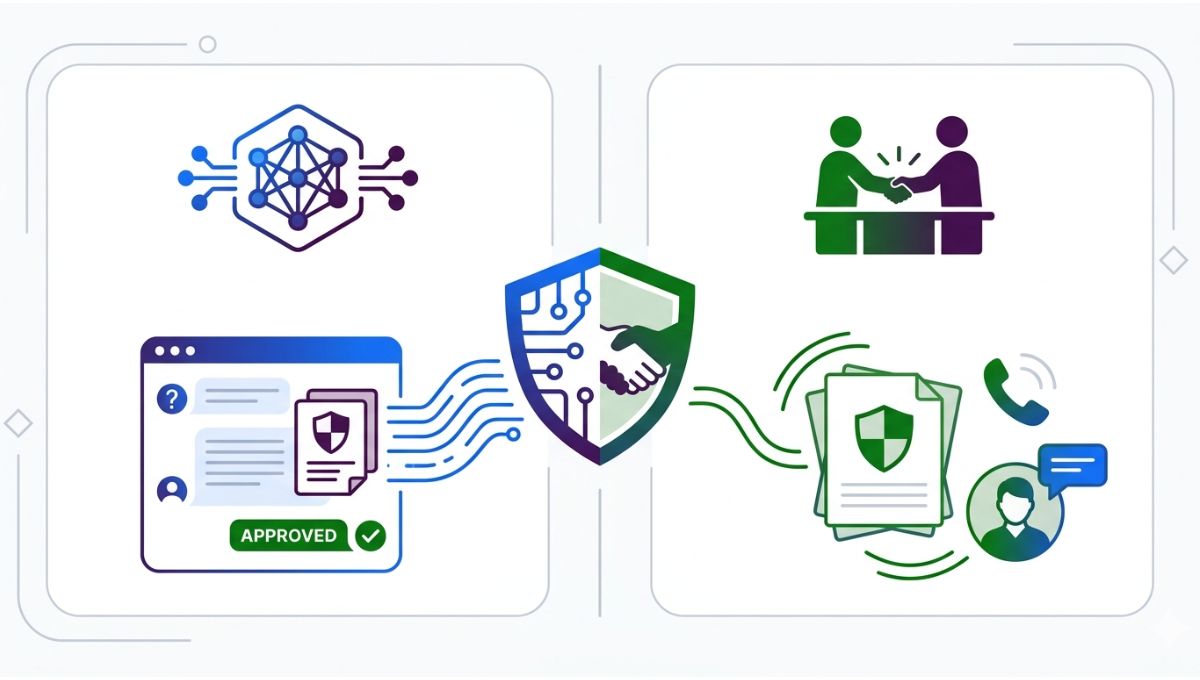
The U.S. insurance market crossed a decisive threshold in late 2025, with mobile-first carriers collectively surpassing $10 billion in digital premiums for the first time, a figure that would have seemed implausible less than a decade ago. Behind that number is a fundamental shift in how Americans shop for, bind, and manage coverage.
According to a 2025 J.D. Power Digital Insurance Study, more than 67 percent of policyholders under 45 now prefer to complete the entire insurance transaction without speaking to a human agent, a figure that has nearly doubled since 2019. The best insurance apps 2026 are no longer just a convenience layer on top of a traditional carrier; they are the carrier, the underwriter, the adjuster, and the customer service desk, all operating from a device that fits in a back pocket.
What makes the current moment particularly significant is that the technological divergence between digital-first insurers and legacy carriers has widened sharply. The January 2025 California wildfires served as an unforgiving stress test for the entire industry, and the results were illuminating. Carriers with AI-driven claims infrastructure handled first notices of loss in minutes, while some traditional insurers took days to staff field adjusters.
Lemonade disclosed that its AI claims bot handled 96 percent of first notices of loss without human intervention as of December 31, 2025, according to the company’s 2025 Annual Report. Root Insurance reported its first profitable full year in 2024, then posted record net income for 2025, built in part on a telematics platform that has now collected over 34 billion miles of driving data. These are not incremental improvements; they are structural shifts in how risk is priced and claims are resolved.
The ten carriers profiled in this analysis were selected based on verified 2025 and early 2026 performance data, regulatory complaint ratios from the National Association of Insurance Commissioners (NAIC), publicly available app store ratings, claims handling metrics, and financial strength assessments.
The goal is to give consumers a clear, data-grounded picture of which platforms genuinely deliver on the promise of digital insurance, and where the gaps between marketing and reality still persist. Policyholders comparing quotes across these carriers should weigh each dimension: a low premium is worth very little if the app fails when a claim needs to be filed.
Latest Updates and Developments in Insurtech
The first quarter of 2026 brought several developments that have materially changed how these platforms compete. In January 2026, Lemonade publicly launched its Autonomous Car insurance product, the first coverage tier designed specifically for self-driving vehicles and advanced driver-assistance systems.
Available initially in Arizona, the product prices self-driving miles at approximately 50 percent of the rate applied to human-driven miles, a direct reflection of the lower actuarial risk attributed to autonomous systems, per Lemonade Investor Relations. Simultaneously, Kin Insurance launched bundled home and auto policies in Florida and Texas in January 2026, a move that immediately gave it a cross-sell capability it had previously lacked. Oscar Health expanded its coverage footprint into Alabama and Mississippi for the 2026 open enrollment period and simultaneously unveiled “Oswell,” an AI-powered personal health assistant embedded directly in the Oscar app.
Root Insurance reported that connected Toyota and Lexus vehicle owners can now consent to share vehicle driving data directly with Root through Connected Analytic Services, effectively turning the onboard computer into a telematics device without requiring the driver to keep a smartphone running during trips.
This Toyota partnership, disclosed in Root’s Q4 2025 investor materials, represents a meaningful evolution in how telematics data can be collected passively rather than through active smartphone monitoring. For consumers, this removes one of the most common friction points with usage-based insurance, the concern that a phone mounted on a dashboard is less reliable than a dedicated telematics device.
The broader insurtech funding environment has stabilized considerably since the correction years of 2022 and 2023. Investors in 2025 and early 2026 have prioritized carriers that demonstrate sustainable unit economics over those chasing pure growth at any cost.
Kin Insurance’s full-year 2025 results illustrated this shift clearly, reporting $201.6 million in total revenue with a 29 percent year-over-year increase and a 49 percent operating margin, according to Crowdfund Insider.
Lemonade, by contrast, reached its gross loss ratio all-time low of 62 percent in Q4 2025 but is still targeting adjusted EBITDA profitability by Q4 2026. The industry’s leading digital insurers are maturing in different ways, at different speeds, and consumers benefit from understanding those differences.
The 10 Best Insurance Apps of 2026
| App | Insurance Type | States Available | App Store Rating (iOS) | Claim Resolution Speed | NAIC Complaint Ratio | AM Best / Demotech Rating |
|---|---|---|---|---|---|---|
| Lemonade | Renters, Home, Auto, Pet, Life | 28+ states + EU | 4.9 | Minutes (AI-automated) | Above median (home) | A- (Demotech) |
| Root | Auto | 36 states | 4.7 | 7-10 days avg. | 1.93 (auto) | NR (Nasdaq-listed) |
| Hippo | Home, Condo, Landlord | 40 states | 4.4 | Varies (concierge) | Moderate | A- (Spinnaker/Topa) |
| Oscar Health | Health (ACA, MA) | 20 states | 4.8 | Digital-first pre-auth | Above median (some states) | N/A (health) |
| Kin Insurance | Home, Condo, Flood, Auto (FL/TX) | 13 states | 4.6 | 24-hr specialist contact | 61% of expected (low) | A (Demotech) |
| Clearcover | Auto | 20+ states | 4.5 | App-based, mixed post-filing | Moderate | NR |
| Next Insurance | Small Business (BOP, GL, WC) | All 50 states | 4.6 | Same-day cert. issuance | Low | A- (Munich Re) |
| Metromile (via Lemonade) | Pay-per-mile Auto | Select states | 4.3 | Standard claims flow | Moderate | Backed by Lemonade |
| Branch Insurance | Home + Auto bundle | 37 states | 4.5 | Digital first notice | Below average (low) | A- (carriers) |
| Toggle (by Farmers) | Renters, Auto, Pet | 40+ states | 4.4 | Standard | Low | A (Farmers/Zurich) |
Lemonade: The AI Claims Pioneer
Lemonade remains the most technically ambitious insurer on this list, and by the end of 2025, its data tells a compelling story of maturing AI infrastructure. As of December 31, 2025, AI Jim, Lemonade’s claims bot, handles first notices of loss without human intervention 96 percent of the time, and approximately 55 percent of claims are fully automated from start to finish. That statistic sits at the intersection of operational efficiency and customer experience: policyholders who file simple claims receive resolution in seconds, not weeks.
Lemonade’s loss adjustment expense (LAE) ratio fell from 13 percent three years ago to 7 percent by Q3 2025, even as claims volume more than doubled, representing nearly triple the claims-handling efficiency at a fraction of the scale of leading incumbents. For context, most major traditional carriers carry LAE ratios around 9 percent. Achieving a lower ratio at a smaller scale indicates structural, not cyclical, efficiency.
Where Lemonade Leads
The app experience is genuinely differentiated. AI Maya handles quote and onboarding flows for 98 percent of new policies, and the interface is widely regarded as one of the cleanest in the insurance sector. The company crossed 3 million customers in early 2026 and now operates with roughly 2,300 customers per employee, a ratio that would be impossible without deep automation. In January 2026, Lemonade launched its Autonomous Car insurance product, pricing self-driving miles at approximately 50 percent of human-driven rates, becoming the first insurer to offer a dedicated product tier for vehicles using advanced driver-assistance systems.
Where the Gaps Remain
Lemonade remains loss-making at the operating level, with positive adjusted EBITDA projected by Q4 2026. The company still incurs significant annual losses; net losses reached approximately $200 million in 2024, bringing cumulative losses since founding to $1.27 billion. That financial position means policyholders in complex claim scenarios may still encounter friction when cases escalate beyond what AI Jim can handle autonomously. Geographic reach, while growing, remains incomplete across several states for certain product lines.
Consumers comparing coverage for auto and home insurance bundles will find Lemonade’s multi-line offering increasingly competitive, particularly after the addition of Lemonade Car in markets representing roughly 40 percent of the U.S. auto market.
Root Insurance: The Telematics Profitability Story
Root entered 2026 as arguably the most financially credible pure-play insurtech in the U.S. auto market. Root Inc. reported record full-year 2025 net income, with CEO Alex Timm noting that among auto insurance carriers with more than a billion dollars in premiums, Root grew policies in force the fastest in 2025. Root now operates in 36 states after adding Washington in Q3 2025, with independent agents representing the fastest-growing distribution segment.
The Root app has more than 16 million downloads, and the company has collected over 34 billion miles of driving data to inform its pricing models. That data volume matters enormously; the more driving miles fed into the pricing engine, the sharper its risk segmentation becomes, particularly for edge cases involving unusual driving patterns or geography.
How Root’s Telematics Works in Practice
The core product concept is deceptively simple: drive responsibly during a test period (typically two to three weeks), and the app calculates a rate that reflects actual behavior rather than demographic proxies like age bracket or ZIP code. For safe drivers who have been unfairly penalized by traditional rating factors, this model can produce materially lower premiums. The Q4 2025 partnership with Connected Analytic Services means Toyota and Lexus owners can now share vehicle telematics data directly, removing the reliance on phone-based sensors.
The Honest Limitations
Root’s entire platform is built around a mobile app with limited desktop functionality, and some users find simple tasks like adjusting coverage unnecessarily cumbersome. Drivers with irregular patterns, rideshare operators, those who commute inconsistently, or anyone in a high-congestion urban market may find the telematics model works against them. Root is also not yet licensed in Massachusetts, New Jersey, or Washington at the start of 2026, leaving gaps in major markets. Drivers in states with high auto insurance rates will want to run a test period and evaluate whether the final quote is genuinely competitive before committing.
Hippo Insurance: Smart Home, Proactive Coverage
Hippo has always occupied a distinctive niche in the insurtech space: rather than simply digitizing the homeowners insurance buying process, it has built a model oriented around preventing losses before they occur. Hippo leans into prevention, smart devices, and proactive outreach designed to catch problems before they become losses. Its free smart home device program, which provides sensors for smoke, carbon monoxide, water leaks, and motion, is one of the more tangible product differentiators among digital-first home insurers.
Hippo serves residents in 40 states and underwrites policies through carriers including Spinnaker Insurance Company and Topa Insurance Company. The use of third-party underwriting partners is a model that reduces Hippo’s balance sheet exposure but also means that claim outcomes can vary depending on which underlying carrier is involved in a given state.
The Financial Reality
Hippo’s positive quarterly results in recent quarters were partially boosted by $46 million from the sale of First Connect, the company’s independent agent platform. That one-time gain obscures underlying underwriting performance and should be factored into any assessment of the company’s trajectory. Consumers seeking deeper insight into home insurance claims processes will benefit from understanding how Hippo’s concierge claims model works. It assigns a dedicated coordinator to complex losses, but the underlying claim resolution is still carrier-dependent.
Oscar Health: The Health Insurance Tech Standard
Oscar Health is not a property and casualty insurer, but any analysis of the best insurance apps 2026 that omits health tech would be incomplete. Oscar has set the benchmark for what a health insurance app should do, and its 2026 suite is its most ambitious yet.
Oscar is available in 573 counties across 20 states for 2026, including new expansions into Alabama and Mississippi, and has launched a suite of AI tools, including Oswell, a personal health assistant, to enhance the member experience. More than 60 percent of members recommend Oscar to family and friends, according to the company’s investor disclosures. That figure is meaningfully higher than the average for ACA marketplace plans.
AI Features That Change the Care Experience
Oscar’s app enables $0 virtual urgent care visits, $0 preventive services, and access to $3 generics for enrolled members. Oswell, the AI assistant launched in October 2025, helps members find in-network providers, estimate out-of-pocket costs, and understand their benefits in plain language. Oscar continues to expand chronic condition support with programs focused on diabetes, COPD, asthma, and cardiovascular-kidney-metabolic syndrome, offering members tailored experiences with $0 specialist visits and health coaching.
Complaint Patterns to Note
Oscar’s NAIC complaint index averages 2.987, above the national benchmark, though performance varies considerably by state. Consumers in states where Oscar has operated longest tend to report better experiences than those in recently entered markets. Anyone assessing health insurance plan options should weigh Oscar’s technology advantages against the network limitations inherent in its EPO-only structure.
Kin Insurance: Built for High-Risk Homeowners
Kin has quietly become one of the most financially solid digital-first home insurers in the market, operating in catastrophe-prone states where traditional carriers are retreating. Kin reported $201.6 million in total revenue for full-year 2025, a 29 percent increase year-over-year, with baseline operating income surging 116 percent to $68.6 million and a 49 percent operating margin. For an eight-year-old insurtech focused on Florida, Texas, Louisiana, and other hurricane-prone markets, those margins are exceptional.
In January 2026, Kin launched auto insurance in Florida and Texas, allowing customers to bundle home and auto coverage and save up to 20 percent on auto premiums. That bundling capability matters significantly in markets like Florida, where homeowners’ insurance is already under severe pricing pressure. Combining both lines with a single digital-first carrier simplifies the consumer experience and unlocks meaningful savings.
What Drives Kin’s Low Complaint Ratio
Customers who switched to Kin saved $989 a year on average based on surveys conducted in 2023 and 2024, and the company’s NAIC complaint index sits at just 61 percent of the level expected given its size, meaning it generates far fewer complaints than comparably-sized carriers. That ratio is one of the better outcomes in the insurtech sector and reflects a claims process that connects policyholders with a specialist within 24 hours of filing.
Homeowners in coastal states dealing with wildfire and natural disaster coverage concerns will find Kin’s product set, including private flood insurance with limits above the NFIP cap, more substantive than most digital alternatives. The company’s Demotech A (Exceptional) financial stability rating and backing from 40 or more A-rated reinsurers provide meaningful solvency confidence for policies in catastrophe zones.
Clearcover: Efficient Auto Coverage, Mixed Claims Experience
Clearcover positions itself as a technology-first auto insurer designed to eliminate overhead from the coverage model and pass the savings to consumers. The app experience for quoting and policy management is generally clean, and the company targets drivers who want lower administrative friction without sacrificing standard coverage options.
Clearcover offers the full range of standard auto coverages, including bodily injury and property damage liability, medical payments, comprehensive, collision, and uninsured/underinsured motorist coverage. Active military members receive a 15 percent discount, with Louisiana-based service members eligible for 25 percent, which represents a meaningful benefit for that segment. The pricing philosophy is built around baking most discounts into the initial quote based on driving profile rather than presenting a menu of add-on reductions.
The Claims Gap
Customers report an easy experience when filing a claim through Clearcover’s app or online tools, but once a claim is filed, service quality declines, with below-average scores for transparency, communication, processing times, and dispute resolution. That post-filing gap is a recurring pattern in reviews and represents the single most significant limitation for Clearcover as a consideration-stage choice. Consumers who rarely file claims may find the low-friction quoting experience and competitive premiums compelling; those who have had prior claims or expect active coverage will want to weigh that service gap carefully.
The national average for a six-month auto policy currently runs approximately $1,084. Because Clearcover does not publish average rate data publicly, obtaining a personalized quote and comparing it directly against top-rated carriers on platforms like QuoteMonster.org is the most reliable way to evaluate its competitiveness.
Next Insurance: Small Business Coverage, Fully Digital
Next Insurance is the only carrier on this list focused exclusively on small business insurance, and it has built a product experience that genuinely reflects the needs of entrepreneurs who cannot afford the time or complexity of traditional commercial lines. Policies are bound entirely online, certificates of insurance are issued digitally in minutes, and coverage types include general liability, professional liability, workers’ compensation, commercial auto, and business owner policies.
Next operates across all 50 states, a footprint that no other pure-play digital-first small business insurer has matched. The app is particularly valuable for contractors, freelancers, and small retailers who need to share proof of coverage quickly, a function that traditional carriers handle through agent-generated paperwork that can take days. The company is backed by Munich Re, which provides a financial strength credential that most insurtech startups cannot claim.
Why Small Business Owners Favor Next
Next Insurance targets small businesses with tailored policies that can be managed entirely online, ensuring convenience and efficiency for entrepreneurs. Coverage limits and policy terms are clearly displayed during the quote process, and the certificate-sharing feature, which allows a policyholder to send a digital COI directly to a client or landlord by text or email, addresses one of the most persistent pain points in commercial lines. Owners comparing personal and commercial auto insurance needs will find Next’s commercial auto product well-suited for businesses operating vehicles for delivery or service purposes.
Metromile (Now Part of Lemonade): Pay-Per-Mile Precision
Lemonade acquired Metromile in 2022 and has been integrating the pay-per-mile auto insurance model into its broader product suite. Metromile’s core concept, charging drivers based on actual miles driven rather than annual mileage estimates, remains one of the most rational pricing innovations in consumer insurance. For drivers who log fewer than 10,000 miles per year, the savings compared to traditional flat-premium auto policies can be substantial.
The Metromile device, which plugs into a vehicle’s OBD-II port, tracks mileage precisely and transmits data to the pricing engine. This approach removes the ambiguity of self-reported mileage, a known vulnerability in traditional rating that leads to inaccurate pricing in both directions. The integration with Lemonade’s infrastructure means Metromile policyholders now benefit from Lemonade’s AI claims processing capabilities alongside the per-mile pricing model.
Who Benefits Most
Urban residents, work-from-home professionals, retirees, and anyone who drives primarily for errands rather than long commutes represent the natural target market. Drivers who want to understand how auto insurance costs are calculated and believe their low mileage profile is not being accurately reflected in their current premium should consider a Metromile or Lemonade pay-per-mile quote as a direct comparison point.
The model has limitations: those who drive unpredictably, or whose mileage varies significantly across months, may find the per-mile structure less predictable than a fixed premium. Emergency road trips, seasonal driving spikes, and car-sharing scenarios can produce billing surprises that undermine the cost-management rationale.
Branch Insurance: Instant Bundling at Scale
Branch has built its product around one specific insight: bundling home and auto insurance through a single digital-first carrier generates better outcomes for consumers, but legacy carriers make bundling unnecessarily complex. Branch’s app collapses the traditional multi-policy quoting experience into a single streamlined flow, and the company has structured its reinsurance arrangements to offer competitive rates by eliminating agent commissions from the equation.
The branch operates in 37 states and has grown steadily by targeting the substantial segment of homeowners who currently hold policies with two or three different carriers because they have never been presented with a genuinely simple bundling option. The NAIC complaint ratio for Branch’s underlying carriers remains below the industry average, reflecting a claims model that has not generated the escalating complaint volumes that have plagued some of its competitors.
The app interface emphasizes the savings calculation, showing consumers in real time how much they save by bundling versus maintaining separate policies. This transparency mirrors the approach taken by comparison platforms and reinforces trust at the consideration stage. Consumers curious about whether switching home insurance companies mid-term is advisable will find Branch’s instant-bind model accommodating of mid-policy transitions.
Toggle (by Farmers): Flexible Renters and Auto Coverage
Toggle is the digital-first subsidiary that Farmers Insurance built specifically to reach younger, renter-focused consumers who find the traditional insurance buying experience incompatible with their lifestyle. Backed by Farmers’ A-rated financial infrastructure and Zurich Insurance Group, Toggle offers renters, auto, and pet insurance with a subscription-style model that allows policyholders to add or remove coverage modules between billing cycles.
The subscription framing matters because it removes the behavioral friction associated with traditional policy amendments. Rather than calling an agent or navigating a legacy portal, Toggle users add a bike coverage module when they buy a new bike and remove it when they sell it, all through an interface designed to feel more like a streaming service than an insurance policy.
Toggle’s availability across 40-plus states gives it a national reach that most insurtech startups lack, and the Farmers backing provides financial stability that allays concerns often associated with newer digital-only entrants. The app’s ratings reflect solid user satisfaction, and the complaint ratio for the underlying Farmers entities remains comfortably below industry benchmarks.
Head-to-Head: Claims Speed and AI Automation Compared
| App | Claims Filing Method | AI Automation Level | Avg. Resolution Time | 24/7 Availability |
|---|---|---|---|---|
| Lemonade | App/Chatbot (AI Jim) | Very High (55% fully auto) | Seconds to days | Yes |
| Root | App/Phone | Moderate | 7-10 business days | App only |
| Hippo | App + Concierge | Low-Moderate | Varies by complexity | Concierge assigned |
| Oscar Health | App + Virtual Care | High (pre-auth) | Minutes (virtual) | Telehealth 24/7 |
| Kin | App/Phone/Email | Moderate | 24-hr specialist | Phone + App |
| Clearcover | App/Online | Moderate (filing only) | Varies widely | App |
| Next Insurance | App/Online | High (COI instant) | Same day (certs) | Digital |
| Metromile/Lemonade | App/Chatbot | High (Lemonade stack) | Seconds to days | Yes |
| Branch | App/Phone | Moderate | Standard | App |
| Toggle | App | Low-Moderate | Standard | App |
Coverage Quality: What the Policies Actually Include
A flashy app is worth nothing if the underlying policy has restrictive exclusions or substandard coverage limits. Here is where several digital-first carriers show meaningful divergence from one another and from traditional competitors.
Standard vs. Replacement Cost Coverage
Kin includes replacement cost coverage for personal belongings as a standard feature, not an optional upgrade. Most basic homeowners policies from traditional carriers default to actual cash value, which depreciates the value of belongings before calculating a payout. That distinction can translate to thousands of dollars in claim settlement difference after a major loss.
Flood Insurance Integration
Kin offers private flood insurance as an add-on with limits substantially above the $250,000 cap imposed by the National Flood Insurance Program. For homeowners in coastal Texas, Louisiana, or Florida, three of Kin’s primary markets, this is a materially better option than NFIP-only coverage. Hippo also offers flood-adjacent endorsements, but the depth of Kin’s flood product is more fully developed.
Small Business Coverage Gaps
Next Insurance’s general liability policies typically exclude professional liability claims in the base product; consultants and advisors need to add professional indemnity separately, a nuance that can lead to coverage gaps if buyers focus only on the general liability premium. Reviewing the full policy schedule, not just the headline price, is essential when using any digital-first business insurance platform.
User Experience and App Store Ratings Compared
| App | iOS Rating | Google Play Rating | Key UX Strength | Key UX Weakness |
|---|---|---|---|---|
| Lemonade | 4.9 | 4.7 | AI chatbot onboarding | Complex claim escalation |
| Root | 4.7 | 4.5 | Transparent telematics | Limited desktop parity |
| Hippo | 4.4 | 4.2 | Smart home integration | Coverage explanation depth |
| Oscar Health | 4.8 | 4.6 | Care navigation tools | EOB complexity |
| Kin | 4.6 | 4.4 | Quote simplicity | Limited bundling (most states) |
| Clearcover | 4.5 | 4.3 | Clean quote flow | Post-claim communication |
| Next Insurance | 4.6 | 4.5 | Instant COI sharing | Product breadth (commercial only) |
| Metromile | 4.3 | 4.1 | Per-mile transparency | Billing predictability |
| Branch | 4.5 | 4.3 | Bundle savings display | Newer brand recognition |
| Toggle | 4.4 | 4.3 | Modular coverage design | Limited lines |
Insurtech Growth and What Drives It in 2026
The U.S. insurtech market is projected to grow at a compound annual growth rate of approximately 20 percent through 2026, fueled by increasing demand for digital solutions and the need for more personalized insurance products. Three forces are driving that growth in ways that will continue to shape how these apps compete.
The first is telematics maturation. Usage-based insurance has moved well past its novelty phase. Root’s 34 billion miles of behavioral data and Lemonade’s AI pricing segmentation both represent proprietary datasets that compound in value over time.
Carriers that have collected years of granular behavioral data can price risk more accurately than any model built on demographic proxies, and that actuarial advantage flows directly into competitive premium positioning. Consumers who have previously accepted unfavorable rates based on their age or ZIP code will increasingly find that behavior-based products offer a more equitable starting point.
The second driver is IoT integration. Hippo’s smart home sensor program, Kin’s water leak detection discounts, and Oscar’s wellness wearable integrations are all manifestations of the same underlying trend: insurers using real-time property and health data to shift from reactive claims processing to proactive risk prevention.
A smoke sensor that triggers an alert before a kitchen fire becomes a claim is genuinely valuable for both the policyholder and the carrier. As these integrations deepen, the carriers with the most sophisticated IoT ecosystems will build loyalty through visible value, not just price. Readers interested in how smart home devices affect homeowners’ insurance premiums will find that the technology is now mainstream enough to generate meaningful savings.
The third is embedded insurance. Root’s partnerships with Carvana, Hyundai Capital America, and Experian Insurance Marketplace represent a distribution model where insurance is offered at the exact moment of peak relevance, when someone is buying a car, not three months later when a renewal notice arrives. This point-of-need integration reduces customer acquisition costs and improves conversion because the consumer is already in a purchasing mindset.
Regulatory Landscape: What Consumers Need to Know
The NAIC has signaled that AI-driven underwriting and claims processing will face heightened regulatory scrutiny across multiple states in 2026. Several state insurance commissioners have issued guidance or initiated investigations into whether AI claims models introduce discriminatory outcomes, particularly in auto and health lines, where algorithmic decisions can correlate with protected demographic characteristics.
Lemonade’s AI models have faced state-level inquiries in the past regarding how behavioral and geographic data are weighted in underwriting. Root’s telematics model has similarly encountered regulatory challenges in states that restrict the use of credit scores and driving-behavior data as rating factors. Consumers should be aware that the regulatory environment for AI claims and underwriting remains actively evolving; a carrier’s current operational model may face modifications as state legislatures and insurance departments update their frameworks.
The FTC’s 2025 report on algorithmic pricing in insurance, released in September 2025, noted that consumers have limited visibility into how AI-driven rate calculations are generated and called for enhanced disclosure standards. Several states are expected to incorporate those recommendations into formal rulemaking in 2026. For consumers, this means that transparency, both in rate calculation and in claims decision-making, will become an increasingly important differentiator among digital-first carriers.
How to Choose the Right Insurance App for Your Situation
The right digital-first insurer depends almost entirely on what coverage type is the priority, what state the policyholder lives in, and what aspect of the insurance experience matters most. A framework that accounts for these dimensions produces better decisions than a single-factor ranking.
Auto insurance
Root is the strongest choice for safe drivers comfortable sharing behavioral data and seeking premium relief from telematics. Clearcover suits drivers who want a straightforward digital experience and can tolerate limited post-claim communication. Lemonade Car is competitive in states where it operates, particularly for existing Lemonade policyholders who benefit from multi-product retention benefits.
Homeowners insurance
Kin is the most financially credible choice for high-risk state homeowners, particularly those in Florida, Texas, or Louisiana. Hippo offers a more compelling smart-home-integrated experience for standard-risk properties. Branch provides the cleanest bundling solution for consumers who want home and auto under one digital roof.
Health insurance
Oscar remains the benchmark for ACA marketplace health insurance delivered through technology. Its 2026 product expansion, AI care navigation, and $0 virtual care integration make it the strongest option for tech-forward health insurance shoppers in its 20-state footprint.
Small business
Next Insurance is unmatched in the digital-first commercial lines space for small and micro-businesses needing rapid policy issuance and easy COI management.
Before finalizing any decision, consumers are strongly encouraged to compare multiple quotes. The premium difference between the best and second-best digital option for a given risk profile can be substantial, and the only reliable way to confirm competitiveness is through direct quote comparison.
Conclusion
The best insurance apps of 2026 represent a genuine maturation of the insurtech promise, not just slick interfaces overlaid on outdated coverage structures, but architecturally different approaches to underwriting, claims, and risk prevention.
Lemonade’s AI automation of 55 percent of claims, Root’s record profitability built on 34 billion miles of behavioral data, Kin’s exceptional operating margins in catastrophe-prone markets, and Oscar’s AI-powered care navigation suite are not incremental improvements on the traditional model. They are proof that technology can fundamentally alter the relationship between a policyholder and an insurer.
That said, the field is uneven. Claims satisfaction and post-filing service quality remain the most significant gap between digital-first carriers and the best traditional carriers. Clearcover’s post-claim communication problems,
Lemonade’s still-unprofitable income statement and the geographic limitations of Kin and Oscar all represent real constraints that consumers must weigh against the genuine advantages these platforms offer. A carrier that resolves 55 percent of claims in seconds is transformatively better than one that takes two weeks, but the 45 percent of claims that still require human involvement deserve just as much attention as the algorithmic successes.
Looking forward, three developments will define which carriers emerge as dominant by 2028. First, the telematics data advantage will compound: Root’s Toyota partnership and Lemonade’s Autonomous Car product signal a coming era of vehicle-native data collection that will make smartphone-based telematics feel as antiquated as paper applications.
Second, embedded insurance will reshape acquisition economics so profoundly that carriers without major distribution partnerships will find customer acquisition costs increasingly prohibitive. Third, regulatory oversight of AI in insurance will intensify, and the carriers that have invested in explainable AI models whose decisions can be audited and justified to regulators will have a durable compliance advantage over those relying on opaque algorithmic black boxes.
For the American consumer in 2026, the practical takeaway is straightforward: the best insurance apps are not just more convenient than their predecessors, they are materially more capable. But capability must be matched to need. Comparing multiple quotes across these platforms, understanding what coverage each policy actually delivers, and scrutinizing the claims experience rather than just the onboarding experience will produce outcomes that serve policyholders far better than choosing based on app store ratings alone.
Frequently Asked Questions
1. What is the best insurance app overall in 2026?
No single app is best for every consumer. Lemonade leads in AI claims automation and multi-line coverage breadth, Root is the strongest for safe drivers seeking telematics-based auto rates, and Kin is the most financially credible option for homeowners in disaster-prone states. The best choice depends on coverage type, state availability, and the claimant experience a consumer expects to need.
2. How does Root Insurance’s telematics model actually work?
Root requires new applicants to complete a test period, typically two to three weeks, during which the smartphone app monitors braking patterns, speed, turning behavior, and distraction levels. At the end of the test period, Root generates a personalized rate based primarily on that behavioral data rather than traditional demographic rating factors. As of late 2025, Root has also integrated connected vehicle data through its Toyota partnership.
3. Is Lemonade Insurance financially stable enough to trust?
Lemonade remains loss-making at the operating level, though its gross loss ratio reached an all-time low of 62 percent in Q4 2025, and the company targets adjusted EBITDA profitability by Q4 2026. It carries an A- rating from Demotech for its insurance subsidiaries. Consumers should note that Lemonade cedes a significant portion of its book to reinsurers, which limits, but does not eliminate, balance-sheet exposure from catastrophic events.
4. How fast does Lemonade actually pay claims?
Approximately 55 percent of Lemonade claims are fully automated, resolving in seconds to minutes. The remaining claims that require human review take longer, and the timeline depends on claim complexity. The company’s AI Jim bot takes the first notice of loss 96 percent of the time, which at minimum accelerates the initial triage regardless of whether the claim is ultimately automated or escalated.
5. Is Oscar Health available in my state for 2026?
Oscar Health offers ACA individual and family plans in 20 states as of 2026, with new expansions into Alabama and Mississippi. The full list includes Arizona, Arkansas, California, Florida, Georgia, Illinois, Iowa, Kansas, Michigan, Missouri, North Carolina, Nebraska, New Jersey, Ohio, Oklahoma, Pennsylvania, Tennessee, Texas, Virginia, and now Alabama and Mississippi. Oscar does not offer Medigap or short-term health plans.
6. What makes Kin Insurance different from other home insurers?
Kin focuses exclusively on homeowners’ insurance in states with elevated natural disaster risk, including Florida, Texas, Louisiana, and Georgia. It includes replacement cost coverage for personal belongings as a standard policy feature, offers private flood insurance with limits above NFIP caps, and launched bundled home and auto coverage in Florida and Texas in January 2026. Its NAIC complaint ratio sits at 61 percent of what would be expected for a carrier of its size.
7. Can Clearcover really save money compared to traditional carriers?
Clearcover aims to build most discounts into the initial quote rather than presenting them as separate line items, which can produce competitive rates, particularly for drivers with clean records and favorable vehicle profiles. However, because the company does not publish average rate data publicly, the only reliable comparison method is obtaining a personalized quote and comparing it against at least two or three other carriers.
8. What types of small businesses can use Next Insurance?
Next Insurance serves a wide range of small business types, including general contractors, electricians, plumbers, cleaners, photographers, personal trainers, consultants, retailers, and restaurant operators. Coverage lines include general liability, professional liability, workers’ compensation, commercial auto, and business owner policies. Certificates of insurance are issued digitally and immediately upon binding, which is particularly valuable for businesses that regularly share proof of coverage with clients.
9. How does Toggle’s subscription-style insurance work?
Toggle, Farmers’ digital-first subsidiary, structures its renters and auto policies as modular subscriptions. Policyholders can add or remove coverage modules, such as bike coverage, musical instrument coverage, or rideshare gap protection, between billing cycles through the app without contacting an agent. This approach reduces the friction typically associated with mid-term policy amendments and is designed for consumers whose coverage needs change frequently.
10. Are digital-first insurers regulated the same way as traditional carriers?
Yes. Digital-first carriers operating as licensed insurance companies, including Lemonade, Root, and Kin, are subject to the same state-level regulatory requirements as traditional carriers, including solvency reserve mandates, rate filing requirements, and NAIC market conduct standards. Managing General Agents (MGAs) that front policies through carrier partners are subject to the same ultimate coverage standards, though the financial strength of the underlying risk-bearing carrier is the relevant solvency consideration for policyholders.
Sources and References
- Lemonade 2025 Annual Report: SEC Form 10-K via StockTitan
- Root Inc. Record 2025 Net Income: Insurance Journal, February 2026
- Lemonade Investor Relations: Investor Day and Product Updates
- Oscar Health 2026 Open Enrollment Press Release, October 2025
- Kin Insurance Review: Bankrate, February 2026
- Kin Insurance Financial Performance: Coverage Cat Review, 2026
- Clearcover Insurance Review: The Zebra, February 2026
- Kin Homeowners Insurance Review: NerdWallet, 2026
- Lemonade Q3 2025 Shareholder Letter
- Lemonade Record Q3 Growth: Insurance Business, November 2025
- Root Q1 2025 Earnings: Insurance Journal, May 2025
- Oscar Health Insurance Review 2026: HealthCareInsider.com
- Hippo vs. Lemonade Comparison: Blake Insurance Group, December 2025
- Lemonade, Hippo, and Root Financial Analysis: Insurance Thought Leadership, March 2025
- Root Insurance Explained: Miracuves, December 2025
- U.S. Insurtech Market Growth Analysis: Advancio
- Best Car Insurance Apps 2026: Insurify, April 2026
- Digital Insurance Companies Guide: Reviews.com